

How do you build a top-performing private equity firm that thrives across industrial, financial and economic cycles?
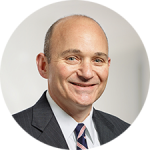
In this episode of Private Market Talks, Michael Psaros, Co-Founder and Co-Managing Partner of KPS Capital Partners, joins partner Howard Beber to discuss KPS’ investment model focused on price discipline, operational transformation and partnership with management teams.
Michael explains how KPS identifies value where others don’t and how his team consistently delivers returns to investors. He also shares insights on global industrial demand, tariff and tax policy, automation and how AI may — or may not — reshape manufacturing.
Howard Beber: Welcome back to Private Market Talks, a Proskauer podcast, where we dive deep into the world of private markets and talk with people shaping the future of alternative investments. I’m your host, Howard Beber. Today, our guest is Mike Psaros, the co‑founder and co‑managing partner of KPS Capital Partners and member of its investment committee and management committee.
First, a little bit about Mike. Mike grew up in Weirton, West Virginia, where his father worked at Weirton Steel facility. In 1983, the employee workers at the steel facility engineered an employee buyout. Seven years later, Mike went to work on Wall Street with Eugene Keilin, the same banker who advised the employees on the buyout of the steel mill. In 1998, the same Eugene Keilin, Mike and David Shapiro, another banker, formed KPS Capital Partners. KPS is a leading global private equity firm that makes controlling equity investments in manufacturing and industrial companies across a diverse array of industries, including basic materials, branded consumer, healthcare and luxury products, automotive parts, capital equipment and general manufacturing. It is known for its ability to execute highly complex global carveouts and is one of the world’s leading turnaround firms.
KPS has approximately $19.4 billion assets under management as of June 2025. KPS has employed the same investment strategy since its founding in 1997, creating value by structurally improving or transforming the business and operations of manufacturing and industrial companies rather than relying on financial leverage. KPS was recognized by PitchBook as the top‑performing fund series in the buyout mega funds category in its 2024 Global Manager Performance Score League. PitchBook analyzed track records over a 27‑year period of mega cap firms. Of the 68 firms in its data set, KPS’s performance was ranked number one. The Wall Street Journal has recently published articles highlighting KPS’ most recent fundraise, including its 30% carried interest versus the market standard 20%, meaning limited partners are objectively willing to pay a 50% premium to invest in KPS funds because of its strength and stability and long‑tenured team, its differentiated investment strategy and its superior investment track record successfully demonstrated across economic, financial and industrial cycles over decades.
Outside of KPS, Mike has served on the board of directors of Georgetown University. He currently serves as vice chair of Georgetown’s McDonough School of Business and is on the advisory board of the university’s endowment. Among other things, Mike is the founder of the Psaros Center for Financial Markets and Policy at Georgetown University, which is a preeminent destination for unbiased expertise at the intersection of finance and policy. In our conversation today, we’ll explore Mike’s views on the projections of private markets, from macroeconomic conditions, strategy and industry exposure to the effect of automation on KPS’s investments. We will also discuss how the private markets have changed over the years and what’s to come.
As with all our episodes, you can get a full transcript of the episode and other helpful information at privatemarkettalks.com. And if you enjoyed the episode, drop us a note. We’d love to hear from you. And now, my conversation with Mike Psaros.
Mike, welcome to Private Market Talks. It’s great to have you on the show.
Michael Psaros: Thank you, and on behalf of KPS and my partners, we’re truly honored to be on your podcast.
Howard Beber: Let’s start a little bit with background. You and your partners have clearly built one of the most successful firms in private equity. Let’s start a little earlier than that. We know your story started in Weirton, West Virginia, where you witnessed the employee steel buyout. So, if you will, why don’t you tell our audience a little bit about how that experience influenced your career focus?
Michael Psaros: Thank you. My personal background and bio, and that of my firm, are one and the same. I grew up in a steel town called Weirton, West Virginia, which is approximately 40 minutes south of the 50‑yard line of Acrisure Stadium in Pittsburgh, where the Steelers play. I grew up in an ethnic immigrant intergenerational town where workers immigrated from Southern and Eastern Europe more than a century ago to go to work in the steel mill. My father was the number three operating executive at Weirton Steel. But I also had great uncles that drove trains, I had cousins that were just general laborers, but it was a magical place growing up. In 1979, Time Magazine had a cover story about the Weirton steelworker being the highest paid industrial worker probably in the history of the world.
Well, that all changed in 1981 to 1983. The North American steel industry experienced its first great cataclysm. So, between Johnstown, Pennsylvania, through the Monongahela Valley of Pittsburgh, into the panhandle of West Virginia, into Youngstown, Canton, and up to the Great Lakes, because of Japanese imports, because of the high dollar, because of a lot of factors, an enormous amount of giant blast furnace integrated steel companies and facilities failed. And so, almost overnight, you had hundreds and hundreds of thousands of men put out on the street. And please remember that for every frontline worker in a steel mill, you have seven to eight workers depending on that job outside of those facilities.
In 1983, National Steel announced that it was going to close or sell the Weirton Steel division of National Steel. Now, at the time, there were well over 5,000 employees in the mill in a town of 20,000. And so, that would be a disaster. And so, a group of Weirton Steel workers, management and union, went to New York in search of a mythical figure known as an investment banker to help them buy the company. And they couldn’t get a meeting with investment bankers. And so, through the union, they were able to get a, through the American Federation of Labor and Congress of Industrial Organizations (AFL-CIO), they were able to get a meeting with Mr. Felix Rohatyn, who was arguably the most distinguished investment banker of his generation at Lazard. He took the meeting with a very young vice president in his early 30s named Eugene Keilin, who is the “K” in KPS, and said, “Gene, you’re going to figure out how these workers are going to buy their company.”
In January of 1984, Gene engineered the largest employee buyout in history, and the first one led by labor, the first one led by a union, when the Weirton Steel Corporation, employee owned, came into existence. Weirton subsequently went public in 1989. Weirton had a good 25 or 30 year run while it was operating. Gene, over the course after that buyout, over the course of the 1980s at Lazard, had a track record second to none, concentrating on manufacturing in industrial buyouts and turnarounds. In 1990, he and a partner, around Christmas, decided to form their own firm. Gene and Ron Bloom left Lazard. It was in Business Week, Fortune, Forbes, all of the business publications that we used to read in hard copy.
Now going back to me, I was in high school at the time and all I wanted to do was get a degree in electrical engineering at West Virginia University like my dad, go into the mill like my dad, spend 30 plus years, I would have been very happy doing that by the way, and then retiring. But here, this 30‑year‑old guy named Gene Keilin literally saves our town, our way of life, thousands of jobs, I figured out what I wanted to do with my life. And so, my father and I went to see the chief financial officer of the company and asked for a phone call with one of these mythical investment bankers. And the investment banker said, “Kid, if you want to be a banker, if you, if you want to be like Gene, go to either Georgetown University or another institution,” he mentioned. And so, I had family in Washington, so it was easy. I decided to go to Georgetown. I graduated, I had the great privilege of being a trainee kid as an analyst at the Bear Stearns Investment Bank, back when there were only eight of us in the investment banking department, and as my second year was coming to a close, in the spring of ‘91, that’s really when Gene and Ron started the firm. And so, executives at Weirton Steele called Gene and said, “You got to meet this kid.” And I walked literally 20 yards from 245 Park to 230 Park. I walked into Gene’s office. He heard the story. He couldn’t believe it. And so, I was one of the first employees. My partner of 34 years, my brother, David Shapiro, was hired two weeks before me by Gene. And so, my story and the Weirton story are really one and the same.
Gene, Dave and I started working together, therefore, in June of 1991. In between 1991 and 1997, we did basically what Gene was doing at Lazard. We were doing buyouts, a lot of employee buyouts, all industrial, all manufacturing, and we did it really well. We developed a derived track record. But what we didn’t have was an institutional pool of capital. We didn’t have a private equity fund. Now, raising a first‑time fund today is really hard, but go back to 1997, when private equity was still embryonic in its infancy. But we decided we needed to raise an institutional pool of capital. Now along the way, between ‘91 and ‘97, we were also joined by my co‑managing partner, Raquel Palmer, sine qua non, the most accomplished woman in the buyouts business, period. She joined us when she was 21 years old as a graduate from Stanford. And so, this was really the team. Over that period of time, substantially all of our buyouts were financed by General Electric. Now, please remember, in 1997, 1998, GE was, without question, the most respected company in the world. It was the most respected industrial company in the world that happened to own the third largest bank in the United States. And so, we went to our friends at GE and we said, “Look. We want to raise a $100 million buyout fund. We need $10 million and the use of your name.” GE gave us $10 million and the use of their name, and because of that, in less than 90 days, we raised $210 million for KPS Fund 1. We believe, I, my memory is that it was the largest first‑time fund raised in ‘97 and ‘98. And so, at the time, it was a big deal. And I would like to tell you it was because of Gene, Dave and Mike and Raquel. It was because Jack Welch signed off on every equity commitment over $10 million, and the world knew that. It was like the ecumenical patriarch of Constantinople sprinkling holy water over your franchise, and because of that, we were able to raise $210 million.
Howard Beber: That is an unbelievable story. Thank you for sharing that. It’s an incredibly inspiring story. God, I have so many questions I’d like to ask you about that, but let’s move on to KPS. You guys have obviously been incredibly successful investing since inception across industrial, financial, economic cycles. Nobody likes to give away secret sauce, but I guess I’ll ask. What’s your secret to success, without giving away the secret sauce?
Michael Psaros: Well, first and foremost, if you study our track record over three decades, first and foremost, we are industrialists and manufacturers. If you ask the children of our partners growing up “What do their parents do?”, they wouldn’t say that they’re private equity investors. They would say that they are industrialists. And we are doing the same thing today that we did three decades ago. We are still doing the same thing that we did 30 years ago. Now, the firm has completely transformed, we’ve, we’ve gone global, we’re big, but at the end of the day, we’re still investing in manufacturing and industry.
Second, we have developed a model that is repeatable, as you said, across industrial, economic and financial cycles. Any private equity firm can get lucky with one deal. Its partners can get rich if they’re just successful with one deal. Any buyout fund can get lucky riding one industry in one cycle. We have developed a model that is repeatable and that has proven successful in a very robust manner across decades. We also have demonstrated a very strict price discipline over the decades. There are cycles in private equity. Those cycles are largely driven by the availability of leverage. We maintain our price discipline year after year and we’re very proud of that. We’re also focused on absolute dollar value creation. I honestly, from memory, can’t tell you what the IRR, the internal rate of return, is on any KPS fund, but I can tell you the money multiple of every fund and the money multiple of every deal. Our total focus is on absolute dollar value creation, monetizing that value creation and returning that value to our investors in cash. And finally, we’ve been very conservative in our growth. We have done fundraises where we have declined more capital that we closed on. I challenge you to find another private equity fund that can say that. We have had very judicious growth. KPS is not about AUM. It is not about asset growth. It is about generating very significant absolute dollar value creation for our investors.
Howard Beber: Yeah. That’s incredible, and you are obviously correct about the industry. We’re in an industry here where many managers like yourself are growing, entering into different strategies, raising funds perhaps bigger than they should have in terms of being disciplined. That’s no easy task, so that’s great to hear. Congratulations on doing that. Let’s go into your strategy for evaluating deals. I’m sure you see many, many more deals than you actually execute on. So, I guess my question here is, what are the key things that you guys are looking for when you’re executing on a deal?
Michael Psaros: Our investment strategy is predicated on seeing value where others do not, buying right, that price discipline we discussed, and then making businesses better. Your question really is focused on the first, seeing value where others do not. First of all, let me say, especially at our flagship franchise, at the size of investments that we’re making, where we’re investing a billion dollars of equity or more, generally speaking, there is no such thing as a proprietary transaction. What I say to our limited partners worldwide, and we have investors from over 30 different countries, is that any general partner that tells you that he has proprietary deal flow is either lying to them or lying to themselves. So, let’s start with the fact that substantially all of the investments that we have made have been marketed by a large global investment bank to the global investment community. However, because we only invest in businesses that require transformative operating change, it really limits the audience or the number of buyout firms that are interested in looking at these opportunities. And therefore, when we talk about seeing value others do not, it’s not my eye or Dave’s eye or Raquel’s eye or other partners’ eyes. It’s our collective eye. We’re able to focus in on a business that substantially all of the rest of the private equity community does not want to invest in. And if we see an ability to effect truly transformative structural change, we get excited and we ultimately will buy and transform that company.
Howard Beber: So, how do you think about partnering with management teams? And particularly, some of your companies are represented by unions, which goes back into some of your deep history. What are the challenges with working with unions in connection with getting your transactions done and getting your companies improved?
Michael Psaros: So, you asked several questions. I’m going to answer them in series. First, management is the alpha and the omega of the success of any company and of any buyout. When we were much younger and inexperienced, Dave and I used to say, “Give me a manufacturing business, let us get it in the top decile from an operating cash cost standpoint and we’ll win.” Now, what the firm says is, “Give us the best management team in the business and we’ll win.” And you use the word “partner.” We truly do partner with our management teams. And so in any KPS fund, and it usually takes us four to five years to invest the fund, we only make around 10 platform investments. That means we’re actually real partners with our management teams. Compare that to another private equity fund who, let’s say, makes 20 or 25 investments in any single fund. That management team is not; they can call them partners. They’re not partners. They’re nothing more than options. The management team knows it. The private equity firm knows it. This is where we’re different. This is also why we’ve had many repeat CEOs across our investing history over the last three decades. As it relates to unions, there is no firm that has our relationship in North America and in Europe with the large manufacturing and industrial unions. Now, please keep in mind this is an estimate, but I would bet only around 25% of our employees globally are represented by a union, okay? But where they are, and where a union is part of a buyout, it goes back to, one, we know the leadership of these unions at the international and national level. We’ve known their leaders for decades. They know us. They trust us. We know them. We trust them. We operate with them on a fully disclosed basis. And so, where we need the union to be an active part of either the business turnaround or the actual buyout transaction, we treat the Union as a full partner with standing, with dignity and respect, and in full disclosure, we will provide our business plans, our turnaround plans, we will say, “Look, we’re going to make this business better. This is what we’re going to do. This is what management’s going to do. Here’s the plan. Here’s what we need you to do.” And generally speaking, we’re successful.
Howard Beber: Great. Thank you for that. Why don’t we shift a little bit to macroeconomic conditions, your views on how those are going to impact investments for the future. We’re sitting here, we’re recording on November 5th, the day after election day. Obviously, a lot’s going on. So, if you will, can you talk a little bit about the current macroeconomic conditions, and how they might shape your investment philosophies and your operational philosophies going forward?
Michael Psaros: We invest across all industrial, financial and economic environments. We never stop. Some environments are better for us than others, but I think it’s important to say that the macro climate, generally speaking, never affects our willingness to invest in the right company at the right time. Please remember we exclusively invest in industrial and manufacturing companies. The overall demand globally, because we do manufacture in over 25 countries. I think your audience should know that. We’re not just American manufacturers. More than half of our workforce is outside of the U.S. We’re currently operating over 210 manufacturing facilities and, as I said, in over 25 countries, we’ve built manufacturing facilities in, well, over 21 countries. And so, I’m giving you a macro global perspective. Industrial demand globally in 2024 was weak. We rolled into 2025, and we were, we were still experiencing relatively weak industrial demand, but there was a lot of factors contributing to uncertainty in 2025. First, there was April 2nd followed by April 9th, which was Liberation Day with respect to the Trump administration’s announced tariff regime, which continued to change. Second, back in April, before passing the Big Beautiful Bill, U.S. businesses, industrial or otherwise, had no idea what our tax regime was going to be in 2026. And so, the confluence of those events really led to hitting the pause button on industrial demand globally, weakening of demand globally. I’m much more optimistic about 2026. First, in terms of U.S. businesses, we have absolute certainty and clarity with respect to a tax regime, that tax regime is now permanent and if due to bonus depreciation in R&D tax credits and how interest is being treated, it is huge, hugely positively impactful for U.S. industrial and manufacturing companies. I mean, the Big Beautiful Bill for manufacturers is spectacular.
Second, we now, to the extent that you can, have far more clarity on the tariff regime. Now, we at KPS, it is central to our investment philosophy is manufacturing in region for region. And so, let me explain and do a compare contrast. In between 2022 and 2023, due to the inflation under the last presidential administration, our portfolio companies were hit with $2 billion of unbudgeted inflationary cost increases. It was the most extraordinary and chaotic year. We were able to pass through all $2 billion plus some. And at that time, in the U.S., and only in the U.S., we couldn’t hire anybody, because people were being paid to stay home and the global supply chain was in chaos. Now, let’s do a compare contrast to tariffs. Looking at the tariffs on April the 2nd, the tariffs in aggregate would have been a $215 million hit to the portfolio prior to mitigation. We have successfully mitigated over 80% of that $215 million through a variety of mechanics, including cost pass throughs, sharing with our vendors, doing all kinds of things. But the point I’m making is that the tariff hit unmitigated would have only been one tenth of what we dealt with back between 2022 and 2023. Now that we have certainty on tariffs to the extent we can, now that interest rates are coming down, interest rates have been way too high for way too long. And so, now that we are hopefully in a cycle of decreasing interest rates, now that the dollar has also weakened, which helps us, now that we have tariff certainty and now that we have tax certainty, I’m hoping for a much better 2026.
Howard Beber: I think we all are. Thank you. That’s great to hear. Let’s talk a little bit about your strategy and sector exposures. I know there are folks who don’t necessarily like the word “turnaround,” or the term “turnaround investing.” I don’t know how you feel about it. But talk a little bit about turnaround investing, misconceptions about turnaround investing that you’ve heard in the industry talking to LPs or other industry participants.
Michael Psaros: So, let’s talk about, you asked two questions, and I’ll, I’ll address each. Turnaround investing: Since the great financial crisis in 2008, we have only acquired three or four companies in connection with financial restructurings or bankruptcies. The word “turnaround investing” often means, for investors, exactly that, buying businesses or assets in connection with financial restructurings. We view turnarounds as the opportunity to make any business better. So, almost 70% of all the capital that we have invested since the creation of the firm as an institutional investor has involved creating a new company to buy a non‑core business from a large, global, publicly traded industrial company. And so, we think we’re the best turnaround investor in the world, but 70% of our capital has been invested in connection with highly complex corporate carveouts accomplished on a global scale. We have acquired incredibly good businesses that we have made great and we have also acquired businesses that were highly troubled, unprofitable, EBITDA negative and also made them great. The skill set is the same. As it relates to industry sectors, we invest, as I said, exclusively in manufacturing and industrial businesses, and we are agnostic. We are the ultimate in opportunistic micro deal specific investing. We are not thematic investors. We’re not broad stroke investors. We focus on each and every individual opportunity that, where we think we can create value. And that is why on one hand, we owned TaylorMade. On one hand, we own Waterford Wedgwood, consumer products, ultimate luxury products. And on the other hand, we’ve owned the largest brass business in the world and the second largest aluminum company in Europe. What they all have in common is that they manufacture a product and that is our expertise.
Howard Beber: Let me ask you something else. I don’t think I can have a podcast in November of 2025 and not ask about AI and how that’s affecting your business at KPS and how that’s affecting your portfolio company’s business and how you think about investing in this new world.
Michael Psaros: Over the last three decades, industry and manufacturing have been transformed by capital and technology. The implementation, for example, of first, the proto and now much better ERP systems, sensor technology, automation, robotics, has been incredibly impactful. And so, very simply, we discussed my father of blessed memory. At the peak of his career at Weirton Steel, it took 10 man hours to make one ton of steel. Today, due to capital and technology, it only takes 0.35 man hours to make one ton of steel. And so, steel assets today, with the proper technology and the proper configuration, are arguably 30 times more productive than they were more than three decades ago. We have companies today where in some of their plants, they employ hundreds and hundreds of robots. Those robots work 24 hours a day. If you look at our AGG plant in Gary, Indiana where we make automotive parts, it looks like a clip of one of the Star Wars films. And so, we, as I said earlier, invest hundreds of millions of dollars in our companies. We are always investing capital to make them more productive by implementing the best technology and the best automation for each company, specific to each company. On your question of AI, it’s way, way, way too early. If you remember, two decades ago, GE announced it was moving to Factory 2.0. That turned out to be nothing more than a slogan. There was not much behind it. I don’t think anyone who’s telling you the truth knows how AI is going to impact modern industry and manufacturing, but let me tell you where I hope it does. If you were a manufacturer today, and I don’t care what product you’re manufacturing, demand is the great unknown. So, substantially, all of our businesses are supplying another manufacturing or industrial customer. So, for example, in my AGG example, we are supplying substantially all of the big automotive OEs in North America. And so, they inform us what they believe their demand is going to be. So, North American OE “X” tells AGG, “We think we’re going to build 25,000 units of this platform.” But the OE really isn’t sure, and the standard deviation between the, what we think we’re going to build versus what we actually build, in most cases across companies, is materially different. But we have to staff up, we have to be prepared to produce that many units, we have to have the raw materials, we have to have it all. If AI can help our customers with predictive demand, it will be completely transformative. And so, if you can tighten the standard deviation between what we think we’re going to produce and what we actually produce, it immediately improves our manning, it improves our working capital employed, it improves everything. And so, the big picture for us is, I hope AI can help us with predictive demand across the platform.
Howard Beber: How much are you guys using AI in your due diligence process?
Michael Psaros: We’re just at the front end. We are currently looking at all of the different AI platforms, AI solutions, and we actually have a team within KPS, along with third party outside professionals, helping us with what we can do better through AI.
Howard Beber: I would say that’s where we are, too, as a law firm. Everybody’s trying to figure it out, but I think we are – I agree with you. We’re at the beginning. Let’s shift a little bit and we don’t have a ton of time here. I appreciate all of this. I know how active you are at Georgetown and I know how proud you are of the Psaros Center for Financial Markets and Policy. If you will, maybe share a little bit with the audience about that organization and what your mission is?
Michael Psaros: I am a very proud Georgetown Hoya. I had the great blessing of serving on the university’s board. I’m vice chair of the board of advisors of the business school. But my mentor is Dr. Reena Aggarwal, one of the great, world’s great finance minds and researchers and an expert on the capital markets. After Lehman blew up, there was obviously a huge reaction in Washington, and there was an enormous amount of legislation and regulation that came out of Congress as it relates to the capital markets and the financial services industry. Dr. Aggarwal came to me in 2009 and said, “We’re in a unique position at Georgetown. Georgetown is the intellectual fulcrum of the District of Columbia. We have our world class business school. We have our law school. Our public policy is second to none. And if you put all that together, coupled with Georgetown’s ability to convene in Washington as also second to none, that we can have a real impact on financial markets and policy.” And so, she created the Georgetown Center for Financial Markets and Policy. Over 10 years, without a lot of capital resources, it really moved the needle in practice and policy in Washington. Three years ago, maybe a little more, my family made a decision, which we view as an act of patriotism, not an act of philanthropy. We made an $11 million gift. We’ve subsequently donated millions more to name what is now the Georgetown Psaros Center for Financial Markets and Policy. We are the leading center of its kind in the United States. Almost overnight, over the last three years, we have become where Wall Street comes to meet Washington. And the magic of the center is that we are the only center which is truly nonpartisan in Washington, and everyone on the Hill understands that and everyone in Wall Street understands that. And so, even if you look at our distinguished fellows, it makes that statement. One of our distinguished fellows is Dr. Lael Brainard, who was vice chair of the Fed. She was secretary of treasury. She was head of the National Economic Council (NEC) under President Biden. She’s one of the world’s great minds. And she’s joined by Rostin Behnam, who was the chair of the Commodity Futures Trading Commission (CFTC). They are serving together with the former chair of the House Financial Services Committee, Patrick McHenry. And so, you know, just our distinguished fellows demonstrate how nonpartisan we are. But I would encourage all of your listeners to please follow the Psaros Center on X and on LinkedIn. Our webinars are pretty extraordinary, and we would welcome you becoming involved in the center for anyone that’s listening that is an active participant in the capital markets, both public and private.
Howard Beber: Okay. That is also incredibly inspiring. Thank you for that. We’re getting to the end here. I like to have a bunch of bonus quick questions for the audience here. So, you’ve worked with your partners for 30 years, which, for our business, for your business, is a very, very long time. What’s the secret to longevity in a partnership like yours?
Michael Psaros: My partners and I, when we started out, we had no money, but we had a dream, and we were very young. And so, the first thing that we have is the shared experience of building something that didn’t exist before. The firm, for us, is our entire adult life. Please keep in mind, I met Dave when I was 23 years old. We met Raquel when she was 21. And so, we have built KPS, and it is that shared experience that binds us together. Second, across all of our partners and the firm is our shared values and value system. Values matter, integrity, character, veracity. There is nothing that I wouldn’t do for my partners or their families or that they wouldn’t do for me. I challenge you to ask that of another Wall Street private equity firm. I just became a grandfather, okay? My partners were there for my daughter’s first birthday party. My partners were there when she got married two years ago, and now they’re about to meet my granddaughter. This is KPS. This is who we are.
Howard Beber: Congratulations.
Michael Psaros: Thank you.
Howard Beber: What advice do you give young professionals who are now looking to get into the private equity business?
Michael Psaros: We evaluate and promote our junior professionals at KPS is as follows. In the NBA, you can’t coach size. You can’t coach height. In the NFL, you can’t coach size. In private equity, you can’t coach judgment. And the only way to develop judgment is by reps, by being involved in deal after deal after deal. And those deals don’t have to close, by the way. You know that we have had some, some junior KPS professionals that have been promoted through the ranks that never worked on a deal that closed, but they distinguish themselves along the way. And so, I would encourage all young professionals to work on as many investments as you can with your teams, and use your ears. Listen and learn, observe, and that is how you develop judgment.
Howard Beber: If you can go back to your first deal when you first started, what would you tell your younger self that you’ve learned along the way that you wish you knew back then?
Michael Psaros: First, I wish at the time that we understood the importance of management like we do today. Back when we were kids and we first started, we were still turnaround guys more than we were owners and private equity investors. That’s number one. Number two, the importance of having the capital resources on the balance sheet to ride out business transformations, to ride out industry cycles. We don’t employ a lot of leverage at our companies at KPS for a reason. Leverage is anathema to industry and manufacturing. And so, great management is the alpha and omega of investing along with capital resources.
Howard Beber: Final question, you’ve been doing this for a really long time, incredibly successful. What motivates you to keep going?
Michael Psaros: One of the things we’re very proud of at KPS — and I say this to our investors — is that we flat out bring it every day. If you are an investor in alternatives, one of the consistent and congruent comments about our firm and our culture is our focus and our intensity. We are an intense firm, and we’re proud of that. In terms of my personal motivation, it’s manifold. First, I don’t want to disappoint my partners. I get up every morning because I know I’m going into the office to see them, to work with them. I count on them, and they count on me. It’s kind of like being in the foxhole with somebody. Every day I want to earn their respect because of how much I respect them. Second is, we’re fiduciaries today to $20 billion of capital. And every investor in every private equity fund is relationship based. It is unique. It is bespoke. And so, I know all of our investors, and I know them very well. And we take our fiduciary duty very seriously. Third is across, we buy and we sell. The rounding numbers today, we have over 55,000 employees in 21 countries. We remind our firm that that’s 55,000 moms or dads, husbands and wives, brothers and sisters that are counting on us for that paycheck. That paycheck isn’t just a paycheck. It is dignity. It is respect. It is a mortgage, car, tuition or healthcare payment. It is the communities in which we operate. Very often, our facilities are the only employer in town in these company towns, in these mill towns. And so, we have a greater duty, not just to our investors and our employees, but also the communities where we operate. And so, if you, if you round that all up, that’s why I get up in the morning and why we flat out bring it every day.
Howard Beber: Thank you. Thank you for that. And Mike, this has been great. Obviously, you and KPS have had an unbelievable run. So, thank you for joining me today on the pod. Any final comments for our listeners?
Michael Psaros: I would just like to thank you very much for your interest in, in KPS Capital Partners for allowing me to speak to your listeners today. It has been a lot of fun, and it has also been a, a privilege. So, thank you very much.
Howard Beber: Thank you for saying that. We appreciate you coming on. I also want to thank our listeners for listening to our episode. And, again, if you’ve enjoyed the episode, drop us a note at privatemarkettalks.com and keep an eye out for our next episode, coming your way next month. Thank you. And thank you again, Mike.
Michael Psaros: Thank you.