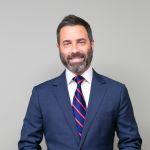
Adam Deitch left Proskauer’s White Collar Defense & Investigations Group in 2019 to join the U.S. Attorney’s Office in Boston. After years of prosecuting cases ranging from violent crime to public corruption, Adam made another leap in 2025, launching a campaign for District Attorney in Norfolk County, Massachusetts, the county just south of Boston. In this conversation with Proskauer Litigation Partner and former colleague David Munkittrick, Adam reflects on the skills and values that carried across each chapter and why he’s committed to public service.
A Fast Transition and a Steep Learning Curve
David Munkittrick: Adam, it’s great to see you. I think it’s been about seven years since you left Proskauer?
Adam Deitch: That’s right. In 2019, I left for the U.S. Attorney’s Office in Boston. I had one week between leaving and starting. I moved from New York, where I’d been for almost 10 years, and jumped into the Major Crimes Unit working as a prosecutor on everything from bank robberies to gun and drug cases, child exploitation, cyberstalking and all kinds of fraud. I was in court constantly, leading teams of federal agents from investigation through grand jury presentations, charging and then prosecuting cases through plea or trial. That had been my career goal for a while after working in the White Collar Group for most of my time at Proskauer.
David: That must have been quite a different pace of life compared to a law firm. Was it a big switch?
Adam: Massive. Not because of the workload, but because the work is fundamentally different. At Proskauer, we were handling huge, complex matters with large teams. Early on, as a prosecutor, a lot of cases were smaller and moved quickly. And you’re on the other side of the “v.” That change in perspective is significant.
“[At Proskauer,] you learn the less visible skills that matter a lot: how to communicate clearly, how to write with precision, how to make judgment calls about what’s most important, and how to be persuasive without being overwrought. That shows up everywhere.”
Adam Deitch, Former AUSA, District of Massachusetts
From Major Crimes to Public Corruption
David: You later moved units. What changed?
Adam: After a couple of years, I joined the Public Corruption and Special Prosecutions Unit. Those are document-heavy “paper” cases, more like the white collar matters I worked on at Proskauer. Instead of relying primarily on physical evidence, you’re living in emails, records and timelines. The volume and complexity of that evidence, and the discipline required to analyze it, felt very familiar.
David: Did you find yourself across the table from big law defense teams?
Adam: Frequently. In most of my major crimes cases, you often see federal defenders or solo practitioners. In public corruption and white collar matters, you’re frequently dealing with large firms and sophisticated teams. Understanding how those teams think and prepare, because I’d been on that side, helped me do my job better.
David: What surprised you most about being a prosecutor?
Adam: How much responsibility sits with the prosecutor, especially because an overwhelming majority of cases end in plea agreements. Charging decisions can shape the entire life of a case, including sentencing exposure. You must think early about where a case is likely headed and what a fair outcome looks like for everyone involved.
David: You’re weighing more than just the facts?
Adam: Exactly. Sentencing is one of the hardest and most important parts of the job: you’re trying to put the conduct and the person in context, while also working hard to get justice for the victims. My experience on the defense side helped to instill empathy across the board and made me more attuned to the totality of circumstances in each case.
“I guess I’ve always thought of us as kindred spirits. You have a steadiness and positivity that holds up under pressure. That mattered as juniors, and it’s still there now. Proskauer is special because of the people, and this is exactly what I mean when I say that.”
David Munkittrick, Partner, Proskauer
The Work That Stays with You
David: Do you have a favorite Proskauer matter?
Adam: Some of the most meaningful work for me was pro bono. Through a relationship I helped build with the Innocence Project, we worked on a variety of cases involving wrongful convictions. When you see a conviction unravel, you’re thinking about the person who lost years of their life, and about the reality that the true perpetrator may have gone free. Those cases have stayed with me.
David: What at Proskauer prepared you for being a prosecutor and for what you’re doing now?
Adam: You learn from exceptional practitioners at every level. You also learn the less visible skills that matter a lot: how to communicate clearly, how to write with precision, how to make judgment calls about what’s most important, and how to be persuasive without being overwrought. That shows up everywhere.
David: Those “soft skills” turn out not to be soft at all.
Adam: Exactly. The ability to write an error-free email that concisely explains complex ideas, or to frame an issue quickly for a busy audience, is something you use constantly. It helped me as a prosecutor, and it absolutely helps me now as a candidate, whether it’s public messaging or the toughest part of campaigning: fundraising.
Running for District Attorney
David: What made you trade the courtroom for the campaign trail?
Adam: Over time, I saw a series of egregious cases taking place in the county just south of Boston that made me think: What on earth is going on in Norfolk County? I realized the District Attorney’s Office needs cultural and systemic change, and I felt there was only so much I could do in my prior role. In November 2025, I left the U.S. Attorney’s Office, moved to Quincy (south of Boston), and committed to running for Norfolk County District Attorney full-time.
David: A lot of people have heard about the Karen Read case. Was that part of what led you here?
Adam: That case drew attention both here and across the country, and it raised serious questions about bias, investigative practices and decision-making at the DA’s Office. I can’t speak beyond what’s been publicly reported, but I do think the broader reaction underscored the need to rebuild trust and strengthen how the DA’s Office investigates and charges cases. That’s a big part of my focus right now: building an office that will be defined by competence, accountability and professionalism.
Enduring Connections
David: We’ve known each other for a long time now. I think this is a great example of the strong connections we build along the way in our careers.
Adam: Absolutely. We summered together in 2009, and it was not a quiet summer. We clicked early and we’ve stayed in touch. You’re one of the kindest, smartest people I’ve ever known.
David: I guess I’ve always thought of us as kindred spirits. You have a steadiness and positivity that holds up under pressure. That mattered as juniors, and it’s still there now. Proskauer is special because of the people, and this is exactly what I mean when I say that.